Showing posts with label apple. Show all posts
Showing posts with label apple. Show all posts
Jan 21, 2026
Sep 9, 2025
Slim iPhone? Hard Pass.

Oct 23, 2024
"Not first, but best" is a tough mantra to sell if you're neither.
In an interview for WSJ Magazine, Tim Cook emphasized Apple's philosophy of "every day, every product," highlighting his own daily use of Apple products, including the Vision Pro. While Cook frames Apple's approach as "not first, but best," questions arise about the true practicality of certain products like the Vision Pro and Apple Intelligence. Critics argue that Apple is falling behind in AI, with internal concerns that they are "more than two years behind" compared to competitors like Google. There is speculation that Apple may need to make a significant acquisition to catch up in the AI space and deliver the revolutionary products it promises.
In an interview for WSJ Magazine, Tim Cook emphasized Apple's philosophy of "every day, every product," highlighting his own daily use of Apple products, including the Vision Pro. While Cook frames Apple's approach as "not first, but best," questions arise about the true practicality of certain products like the Vision Pro and Apple Intelligence. Critics argue that Apple is falling behind in AI, with internal concerns that they are "more than two years behind" compared to competitors like Google. There is speculation that Apple may need to make a significant acquisition to catch up in the AI space and deliver the revolutionary products it promises.
Jul 13, 2022
Apple is Cooked
Apple Ends Consulting Agreement With Jony Ive, Its Former Design
This coming three years after Tim Cook promises to work "long into the future" with Ive. Tim Cook is fatally uncool.
This coming three years after Tim Cook promises to work "long into the future" with Ive. Tim Cook is fatally uncool.
Jun 14, 2022
2022 WWDC

Feels like the door is wide open for a new player to enter as the challenger brand and call Apple what it’s starting to feel like… old.
Jun 3, 2022
💡 idea(!) Apple Facetime TV

Mar 19, 2022
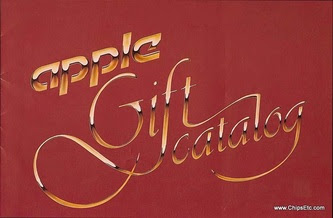
Apple Computer Gift Catalog (1983)
Vintage Apple merch and nostalgia via chipsetc.com:
The Apple gift catalog was a full-color, promotional gift catalog available for free to the general public by mail or through Official Apple retail computer dealers. Apple wanted to promote it's famous Apple rainbow logo further through the use of unique, custom made gift items. Some interesting (and now hard to find) items found in the catalog included an Apple II computer puzzle, an Apple brass belt buckle, an Apple rainbow logo latch hook kit or handmade wall hanging, various Apple rainbow logo jewelry - lapel pins, tie tacks & a gold necklace, an Apple brass cube paperweight, an Apple rainbow logo kite, and of course, those classic 1980's Apple logo T-shirts.


Feb 6, 2022


Nov 12, 2021
Oct 5, 2021
10th Anniversary of Steve Job's Death

On the 10th anniversary of Steve Jobs’s death, Sir Jony Ive reflects on their collaborations and friendship:
Steve’s last words to me were that he would miss talking together. I was sitting on the floor next to his bed, my back against the wall.
After he died, I walked out into the garden. I remember the sound of the latch on the wooden door as I gently pulled it closed.
In the garden, I sat and thought how talking often gets in the way of listening and thinking. Perhaps that is why so much of our time together was spent quietly.
I miss Steve desperately and I will always miss not talking with him.
Read full article via Wall Street Journal – also an insanely beautiful film on apple.com remembering Steve.
Sep 1, 2021
Steve Jobs' 2005 Stanford Commencement Speech
Jul 21, 2021
The Picasso Way

In 1945, Pablo Picasso created "The Bull," a series of 11 lithographs that took a month to create. In the early stages, you can see the bull is very realistic – details show the bull with a snout and hooves, but with each successive print, the details disappear and the bull's form is deconstructed and simplified. The last image is completely abstract and contains only a curved stick figure that still resembles a bull.
Picasso's goal was to "find the spirit of the beast."
In one of Apple's internal training, the 11 lithographs are shown to employees as an example of how the company communicates and builds products. The idea is that a great work of art is created by eliminating non-essential details and striving for simplicity – find the essence of what you are creating. Design helps you express and communicate this essence.
 In a class at the company’s internal training program, an Apple University instructor compared the 11 lithographs of Picasso’s “The Bull” to the way Apple builds its smartphones and other devices. The idea: Apple designers strive for simplicity just as Picasso eliminated details to create a great work of art. Simplicity has always been at the core of Apple and you can see this iterative approach when you look at the history of their product design.
Feb 25, 2019
Purpose. Not Products.
In 1997, Steve Jobs returned to Apple as CEO. His first task was to rebuild and reintroduce the Apple brand. The result was the "Think Different" campaign.
Just prior to introducing the new campaign to his colleagues at a company all-hands meeting, Jobs shared his thoughts on the role of marketing:
"Marketing is about values... This is a very complicated world, a very noisy world and we're not going to get the chance to get people to remember us. No company is. So we have to be very clear about what we want people to know about us."
The award-winning “Think Different” commercial did not once mention a computer. In fact, it didn’t even mention Apple by name. Instead, the campaign focused on people and personalities that changed the world.

Instead of sharing information about their product, Apple focused on creating an emotional connection with their customer — more feeling than function.
The campaign was a tribute to the creative rebels, who thought differently and broke the rules. Although the campaign never once showed the Apple computer, it effectively positioned Apple, and those who purchased an Apple computer as people who were going to change the world — the computer was simply the tool to empower that change.
The most iconic brands in the world spend very little time marketing the features or function of their products. Most of the time, they avoid mentioning products altogether. Instead, they focus their messaging around a purpose or an idea.
In 2011, Patagonia took a stance against consumerism when they told their customers NOT to buy their products. The famous "DON'T BUY THIS JACKET" ad ran on Black Friday was intended to raise awareness around their environmental footprint:
"Each piece of Patagonia clothing, whether or not it’s organic or uses recycled materials, emits several times its weight in greenhouse gases, generates at least another half garment’s worth of scrap, and draws down copious amounts of freshwater now growing scarce everywhere on the planet."
The ad supported Patagonia's mission to inspire and implement solutions to the ongoing environmental crisis.
More recently, Nike took a calculated risk when they launched the Colin Kaepernick campaign during the NFL season opener. The video featured the tagline, "Believe in something. Even if it means sacrificing everything," highlighting Kaepernick's national anthem protest against police brutality.

The campaign instantly sparked outrage. At the same time, it connected with Nike’s belief-driven buyers — a predominantly millennial demographic who is much more socially and politically active than older audiences. According to a recent ESPN poll, the campaign effectively reached Nike’s core base of 18-29-year-old males, and online sales grew by 31% post-launch.
Nike CEO Mark Parker reportedly told Wall Street analysts that the Kaepernick campaign resulted in "record engagement with the brand."
Today's content ecosystem is rapidly shifting. Allowing for and pushing organizations to create content that reflects their beliefs. Previously, organizations were afraid to take risks and opted instead for a one-size-fits-all approach to content. In most cases, organizations completely avoided any polarizing political or cultural issues. In an increasingly noisy world, brands can no longer ignore these subjects. Customers want to know if you’re with them or against them. They want authenticity.
As Phil Knight recently stated during a presentation at the Stanford Graduate School of Business,"You can't be afraid of offending people. You can't try and go down the middle of the road… You have to take a stand on something.”

Brands like Nike, Patagonia, and Apple have become iconic brands because they have clearly communicated their purpose, ideas, and beliefs. This is how communities are formed and brand loyalty is built.
In today's market, customers are looking for more than a product. It's no longer about features or functions -- it's about ideas and beliefs. Today's customers aren’t buying products, they are buying purpose.
Subscribe to:
Posts (Atom)